
What is transcranial electrical stimulation (tES)?
Transcranial electrical stimulation (tES) is a non-invasive brain-stimulation technique that applies low-intensity electrical currents through scalp electrodes to modulate neural activity and enhance brain function.
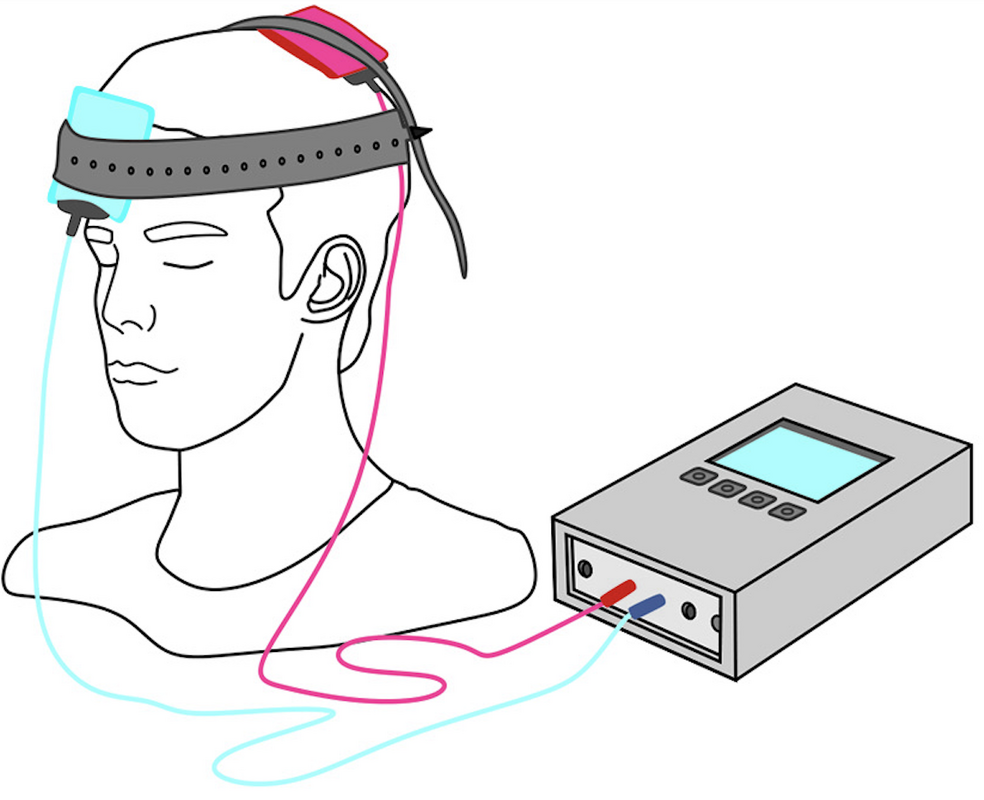
Stimulation modalities
- tDCSTranscranial direct current stimulation
- tACSTranscranial alternating current stimulation
- tRNSTranscranial random noise stimulation
Applications of transcranial electrical stimulation
Cognitive enhancement
tES has been shown to influence higher-order cognitive functions, including attention, learning and information processing. By modulating neural-network activity it can enhance cognitive performance and facilitate more efficient brain function¹.
Neurorehabilitation
tES is being investigated as a promising adjunct in neurorehabilitation². By influencing cortical excitability, neural oscillations and neuroplasticity it may support rehabilitation when paired with task-specific training³. Early studies, particularly in post-stroke visual rehabilitation, suggest potential benefits, although further controlled trials are still needed¹.
Visual function
tES can influence visual processing by modulating activity in the visual cortex and associated pathways. Studies have shown effects on visual perception, including contrast sensitivity and cortical responsiveness, highlighting its potential in visual rehabilitation¹.
Our programme: micro-current stimulation in glaucoma
In 2024 Likemountain acquired transcranial micro-current therapy technology after visiting Georg-August-Universität Göttingen. In 2025 we obtained IRB approval and Ministry of Health and Welfare authorisation for a clinical trial of micro-current stimulation in glaucoma patients. The trial runs through 2026–2027; a TFDA medical-device licence is targeted for 2028–2029.
- 2024
Visit to Georg-August-Universität Göttingen, Germany; acquisition of transcranial micro-current (tES) therapy technology.
- 2025
IRB approval and Ministry of Health and Welfare authorisation to run a clinical trial of micro-current stimulation in glaucoma patients.
- 2026 – 2027
Clinical trial in progress; completion expected 2027.
- 2028 – 2029
Expected: TFDA medical-device licence for transcranial micro-current stimulation in glaucoma.
References
- Antal A, Paulus W, Nitsche MA. Electrical stimulation and visual network plasticity. Restor Neurol Neurosci. 2011;29:365–374.
- Abd Hamid AI, Gall C, Speck O, Antal A, Sabel BA. Effects of alternating current stimulation on the healthy and diseased brain. Front Neurosci. 2015;9:391.
- Alber R, Moser H, Gall C, Sabel BA. Combined transcranial direct current stimulation and vision restoration training in subacute stroke rehabilitation: a pilot study. PM R. 2017;9(8):787–794.